Even though my major was Elementary Education, and my concentration was Reading, I graduated college without knowing how to teach a child to read. My education was mostly woke, fluff. I would be resentful if I had loans.
Through homeschooling, I learned how to teach a child to read. In hindsight, I can pick out the best things I did. I share them with you, in the hopes that you try them, and they make your homeschool better.
LETTER FLASH CARDS
Drill letter flash cards.
Write lower case letters on blank note cards that have a hole through them.
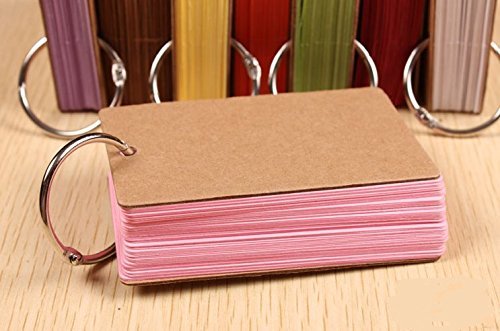
You teach the child the sounds only.
Not the name of the letter
Not a word that starts with the letter. We don’t want the children thinking about monkeys, apples and turtles when they are trying to sound out “mat.”
Teach the sounds ONLY.
Age 4, or 5 is a fine time to begin. I don’t believe in starting to teach letters at age 1 or 2, and continuing for 4-5 years. That is not an efficient use of your time. I know some of wont like this advice. Keep reading. You’ll like the next parts better.
PHONICS GAMES
I didnt discover this until my 3rd child.
Isolate the sounds of a word and have your child guess the word. Use words with 2 or 3 sounds.
/B/ /A/ /G/ and see if they can guess the word is “bag.”
You will probably be surprised at how bad at this your child is. 🙊
To make it easier give two choices

Tell little stories with this phonics game.
“Once apon a time there was a hungry dog that saw some bacon. He wanted to /E/ /T/ the bacon….”
Maybe your child will shout out, “Eat!”
You couldn’t possibly make this game too easy. In my experience, children are atrociously bad at these games, at first.
If your child doesnt catch on, after days of play, and they are under 5, perhaps you started too young.
It doesn’t make sense to move on to the next step if your child can’t understand this one. He wont be able to sound out a word and recognize that what he pronounced is a real word. To him /B/ /A/ /T/ doesn’t mean bat. It doesn’t mean anything.
WORD BUILDING WITH MAGNETS
Your child caught on to phonics. It’s time to make words. Bust out the refrigerator magnets!
Here is a free vintage book of words you can make with refrigerator magnets.
You can start the next step while you are enjoying your magnets.
LEAP FROG VIDEOS
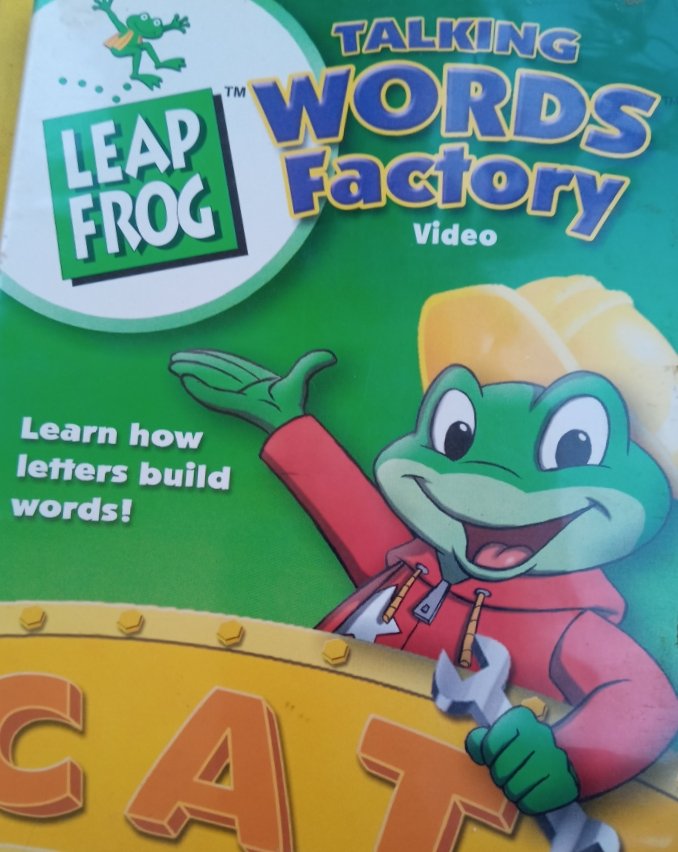
There aren’t many cheats in life, but I found two Leap Frog videos which will entertain and teach your child while you veg out! Your child can learn the names of the upper and lower case letters, and firm up his knowledge of the sounds, with The Letter Factory. He will learn to sound out words with Talking Words Factory. They are the only 2 videos for learning to read that I recommend.
Do not waste this gift by letting your child get bored with the videos before he is ready to learn to read. Use these only when he is ready. Once he can sound out simple, two and three letter words, stop showing the videos so you don’t spoil it for his little sister.
PRIMER
A primer is the first book in a set of graded readers. It has word like “in” and “cat.” Each lesson has a list of new words, and sentences which use all the new words, and some old words.
The McGuffey Primer is free online. Using a real book is much better. I will let you borrow my copy if you solemnly swear to return it.
I learned this way to teach from a primer from a vintage guide to The McGuffey Readers. It will work with any primer.
On unlined paper, or a chalkboard, randomly write all the new words that you know your child can not read easily. Tell your child what all the words are. Give them a pointer. Say each word slowly and let them point to the word. Say the words out of order, while your child points. Let the child tell you what to point to. If they can’t learn all the words in one sitting, continue another day. Once they can easily say all the words, have them read the primer.
WORD CARDS
These activities are to be used in addition to the previous one, so your child can learn the words in the primer.
Occasionally leave a trail of word cards with a pile of Skittles at the end. After your child reads all the words, he can eat the candy. This activity isn’t for every day. It is a special treat.
I think this is one of Eve’s favorite homeschool memories. 😊
Play Memory and Go Fish with the words. It is perfectly fine to read the words for the child while you play. He will listen and he will be able to read them himself soon.
Don’t bother trying to make Pinterest-perfect cards because your child will quickly learn to read the cards and then they can go in the garbage.
EASY-TO-READ BOOKS
After a while, you will get bored with the primer and want to read lots of real books. Go for it!
Buy easy-to-read books used at The Humane Society. You will find lots of cute books in great condition for $1 or less.
No, you can’t depend on our lousy public library. The people who “work” there are half as bad as the spawn-of-Satan at the DMV.
If you have money burning a hole in your pocket, order paperback books with seven sentences that your child will memorize in one day, for $14.95 each. The rest of us will use the Humane Society.
One book that actually IS worth ordering is Days Go By. Eve learned how to read on this book!
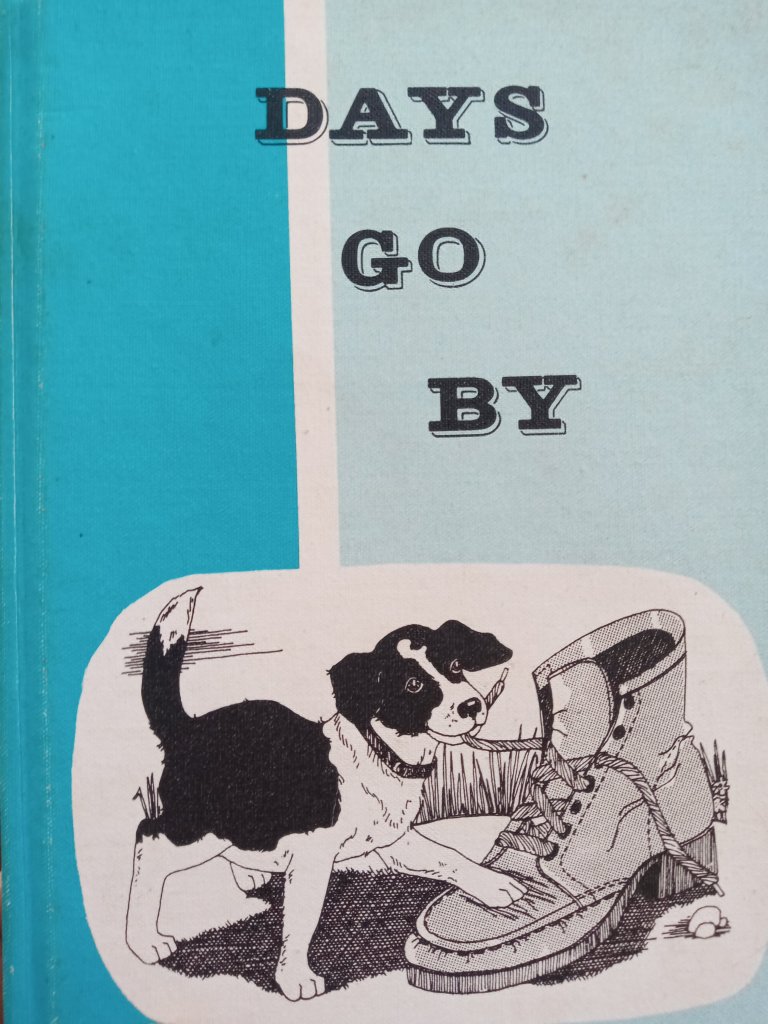
This book has a lot of words. It is sturdy enough to last through several children. It has interesting stories. It would make a child feel proud to be able to read a book like this.
But don’t rush! Read the book TO your child. Read Slowly. S l o w l y. Point to the words. Have your child point to the words. Read so slowly that he might delight you by saying the word before you do. (But don’t require them to.) It’s like flash catds, with context.

Read it so slowly you sound like you are on tranquilizers..
One day your child will be able to read a whole paragraph to you. You could read the next paragraph One day he’ll read a whole page. But don’t rush it! Don’t pressure and frustrate a child who isn’t capable yet. Have patience.
A LEARN-TO-READ PROGRAM
A program designed to teach your child to read is an optional ADDITION to all of this.
If you are going to use a Learn-to-Read program, you can start it while you are reading easy-to-read books to your child.
When my 3rd child was little, someone gave me a program with a lesson book and booklets. Here are two photos from the lesson book, and one photo of a booklet.
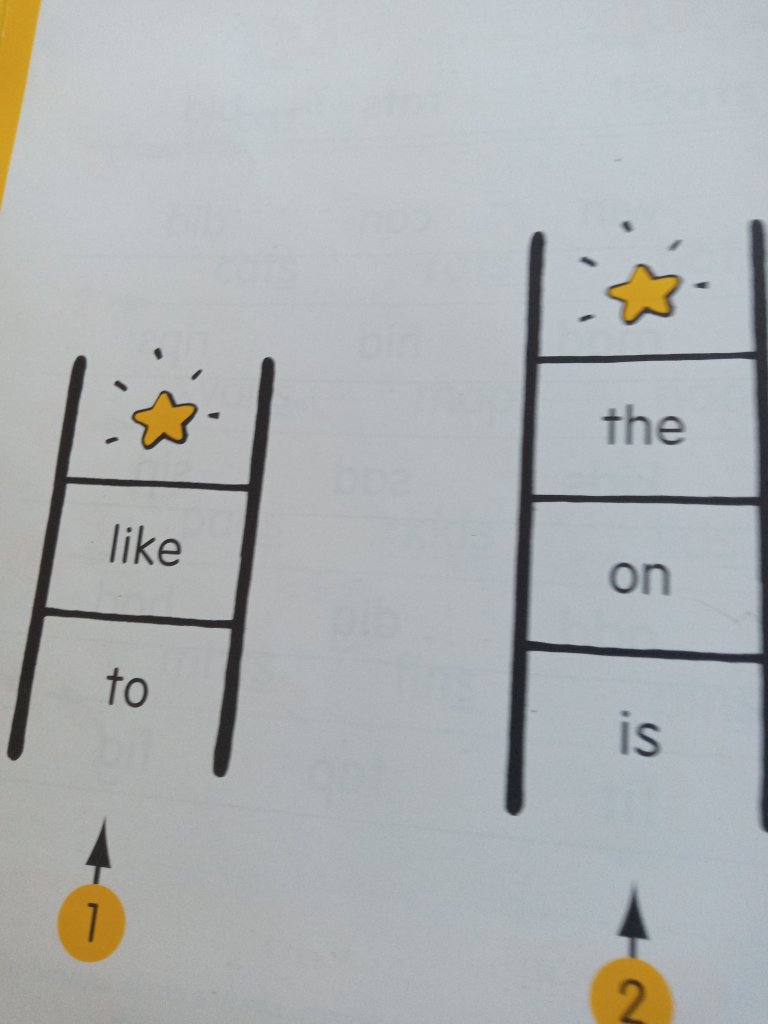

And there is a sticker chart to mark each lesson completed.
It comes with other things which you can ignore because all you need is the lesson book, booklets and sticker chart.
I am strangely interested in schoolbooks and I am a very tough critic. This program deserves an A+
It is called Hooked On Phonics. Even though it wasn’t invented by a crunchy granola mom at her kitchen table…even though it was advertised on TV, it is an excellent program. Don’t you dare think that you are too good for Hooked on Phonics.
Buy it online. You don’t need the latest version. Get the cheapest one. I can’t let you borrow mine because I like it too much to risk letting you lose a booklet. My baby will learn to read one day.
Your child will zip through the Kindergarten level and continue reading easy-to-read books with you for a while, before being ready for the first grade program. After the first grade program, he will read easy-to-read books and it may soon be apparent that he doesn’t need the second grade level. He’ll be such a great reader!
I think that one reason that it isn’t often used in schools is because it would be difficult to make it last all school year. It’s the perfect addition to a homeschool full of interesting books. It is also perfect to use in the summer, to bring a student is behind, up to speed.
In summary, I recommend:
Letter Flash Cards to learn the sounds
Phonics Games make it easy!
Word Building with refrigerator magnets
2 Leap Frog videos – Life is too easy!!
A Primer – do lessons where you point to the words
Word Card Games Go Fish, Memory and occasionally, a candy treat
Easy-to-Read Books Buy used
A Learn-to-Read Program Hooked on Phonics
 eden
eden 